
Soil Sampling for Geotechnical Investigations
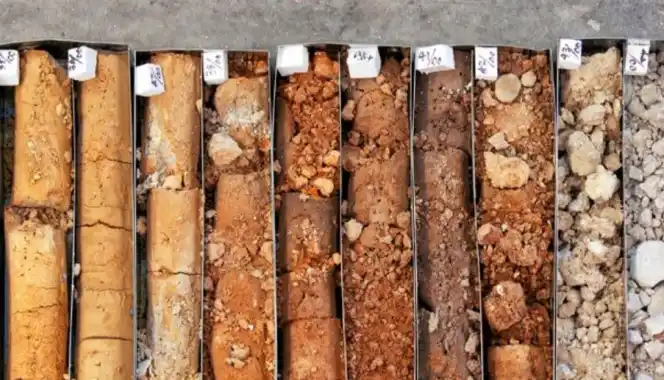
Soil sampling is a crucial step in geotechnical investigations, and various samplers are used to obtain soil samples. These samplers can provide either disturbed or relatively undisturbed samples, depending on the method and equipment used.
Shovel Sampling
Soil can be obtained by digging with a shovel directly from the site. This method yields disturbed samples, which may not accurately represent the in-situ soil structure.
Trial Pits
Trial pits are small trenches excavated by hand or machine to determine groundwater levels and collect disturbed soil samples. They offer a practical way to observe subsurface conditions directly.
Hand/Machine Driven Auger
This sampler consists of a short cylinder with a cutting edge attached to a rod and handle. By combining rotation and downward force, the auger penetrates the ground to collect disturbed soil samples.
Continuous Flight Auger
This method uses an auger that works like a corkscrew. It is driven into the ground and then lifted out, retaining soil on its blades. The soil obtained this way is considered disturbed.
Split-Spoon / SPT Sampler
Used in the Standard Penetration Test (SPT), the split-spoon sampler consists of an 18"-30" long, 2.0" OD hollow tube split lengthwise. A hardened metal drive shoe with a 1.375" opening is attached to the bottom, and a one-way valve and drill rod adapter are at the top. The sampler is driven into the soil with a 140-pound hammer falling 30". The number of blows required to drive the sampler 18" is recorded. Typically used for non-cohesive soils, the samples obtained are considered disturbed.
Modified California Sampler
Similar to the SPT sampler, the Modified California Sampler has a larger diameter barrel usually lined with metal tubes to contain samples. Despite its design for more accurate sampling, the samples are still considered disturbed due to the larger area ratio.
Shelby Tube Sampler
Used for thin-walled tube sampling as per ASTM D 1587, the Shelby Tube Sampler consists of a thin-walled tube with a cutting edge at the bottom. It is attached to a drill rod via a sampler head with a check valve and pressure vents. Typically used in cohesive soils, the tube is pushed into the soil, and the sample is retained through vacuum and soil cohesion. Samples obtained are relatively undisturbed. Standard dimensions include 2" OD, 36" long, and 3" OD, 36" long, among others.
Piston Samplers
These thin-walled metal tubes have a piston at the tip and are pushed into the bottom of a borehole. The piston remains at the soil surface while the tube slides past it, allowing for the collection of undisturbed samples in soft soils. However, they are difficult to use in sands, stiff clays, and gravelly soils. The Livingstone corer is a common type of piston sampler.
Pitcher Barrel Sampler
Similar to piston samplers but without a piston, this sampler has pressure-relief holes near the top to prevent pressure buildup. It is suitable for collecting samples from clay, silt, sand, and partially weathered rocks.
By providing a range of built-in and customizable soil samplers, GeoIntegrate ensures accurate and reliable data entry for a wide range of geotechnical projects.